D A Parsons

Author Site

Author: DaveP

  • Letters

    The epistolatary novel is a well-used form from Clarissa (Richardson) to Excession (Banks), so, while I can’t (yet) see myself writing a whole novel in this style, I thought I might write a chapter in Sudden Deaths using the approach.

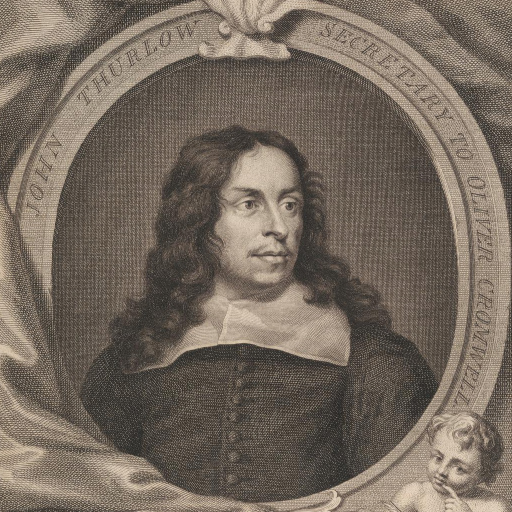
    Chas/Sarah is exchanging letters with Thurloe as she is brought into play in the story, quite independently of Ben. I think Thurloe believes Ben may need a helping hand, but doesn’t want to display any lack of confidence.

    Not something I’ve tried before, so wish me luck.

  • Does AI Mean the End for Novelists?

    Some of my novelist friends are very concerned about the impact of AI on their profession.

    If a lot of AI generated ‘slop’ is created, will their hard won handiwork disappear in a tide of rubbish? Will readers find it even harder to track down quality fiction? Will publishers, (including those who support self-publishing) as well as writers, become irrelevant?

    Again there are no easy answers, but I do believe that most people can tell good writing from bad – of course, if AI writing gets much better, as it must in time, it may be that us poor humans will not be able to compete – perhaps we won’t deserve to?

    In a world where, it seems, anything we do manage to publish seems to be treated as fodder for the AI behemoths, to be regurgitated in garbled fashion to anyone with the right prompt, it sometimes doesn’t seem worthwhile anyway? ☹️

  • Writing and AI – Copyright

    Caveat: I am not a lawyer and the following represents my understanding of the law – not to be relied upon for legal purposes!

    Since the ’60s, in England, if I write sufficiently specific instructions to make a computer create a piece of work (writing, artwork, a computer program etc.), then I own the copyright in that work.

    I make a drawing of a unique object using computer aided design software, have my computer turn that into a .stl file (Standard Triangle Language, a file used to define a 3D shape using triangles), then put that into a ‘slicer’ (software which translates the stl file into g-code the detailed instructions for my type of 3D printer) and use the printer (and its embedded computer) to produce the object that I had in mind at the start. I think most people would say that I created that object and should be entitled to hold copyright in my original work.

    If I write a 500 word synopsis of a novel and ask ChatGPT to give me the 100,000 word finished novel, then I own the copyright in that novel. Should I? In most parts of the world the legal answer seems to be ‘No’ and there are moves to change English law to fall in line.

    The argument in the US and other jurisdictions seems to be that if the AI created the work, then, since the AI is not a person and cannot own the copyright, there is no copyright. Of course, the word created is the crucial one in this. I hold copyright in what I write in my own words. Suppose I decide that I have overused the word ‘significant’ in my novel. I could look online at a Thesaurus and go through changing occurrences of ‘significant’ to ‘noteworthy’ or ‘important’, at random. I could get my word processing software to do most of that work for me. I could write a program to do it for me, either from a list of synonyms that I gave it, or by looking online for synonyms. Or I could get ChatGPT to do the job. Is there a difference in ‘creativity’?

    Once again, I have to leave it to better minds than mine to define the legal distinctions in a consistent and logical fashion.

  • Writing and AI – Editing

    ‘Edit: to prepare a piece of writing for publication by correcting, or otherwise modifying it’ – from OED (edited!).

    It’s generally accepted that the sort of spelling and grammar checking built-in to most word processing software, is perfectly acceptable in novel writing. It is difficult to imagine a writer not using such tools in the 21st Century, unless explicitly as part of their ‘art’.

    If your idea of editing includes giving an AI 1,000 words of your outline and asking for a 100,000 word novel, then most of us would say that it was not ‘your’ work. This is pushing the limits (beyond breaking point in my opinion) of ‘otherwise modifying it’.

    The murky water lies between these two extremes and is further muddied when we ask what is, or is not, AI. When publishers, including self-publishing operations like KDP, ask if you used AI in the production of your novel, what do you say? If you used the tools built-in to your WP, does that count? What about stand-alone spelling and grammar checkers like Grammarly or PerfectIt? Cleverer software will check for inconsistencies in names, places or even ‘tone’. Is this then AI? To check for inconsistencies it will have to look at your whole MS at once. Are you happy about giving a remote computer your whole novel?

    I am asking a lot of questions and not giving any answers. That is simply because I don’t think there are any definitive answers to any of these questions. You have to decide what answers work for you.

  • Writing and AI – Research

    If AI is not much use for doing the writing, how can it help?

    I think that it can be helpful in research. If you ask ChatGPT for something specific like “Describe the dress of a young law student in 1650s London. Give references.”, you get a reasonable answer and the references will allow you to check accuracy. Sometimes the references make it clear that answer is not as time accurate as you might like, but any major errors show up easily. Turning up and reading those references is likely much the same as doing your research from scratch, but the AI points you to useful ones very quickly.

    Is this lazy? Or is it a useful saving of the author’s time that gives 90% of the result for maybe 50% of the effort? Good enough for a work of fiction, rather than an academic essay? Your choice.

  • Writing and AI

    A question was raised at the last Devon HNS meeting concerning AI and its effect on novelists, which made me think about how one might use AI in writing historical fiction.

    You can use a prompt to make the AI write a whole piece of fiction for you.

    I can see two major issues in doing this.

    Firstly, I would not be interested in writing in this way. I write because I enjoy the process of creating a story and putting it down on paper and putting it out with my name on it; my creation. I can’t see any point in getting a computer to do that for me. What would be the point in ‘solving’ a crossword by simply looking up the answers and filling them in: or ‘doing’ a jigsaw by getting a computer to tell you where each piece goes?

    But the bigger issue seems to me to be the quality of what comes out. What makes historical fiction good (as opposed to what makes other fiction good, which you need to do anyway) is the level of historical detail, evoking for the reader that particular time and place. This is precisely what AI is worst at. Not only that, but when there is detail, existing AIs are likely to make it up or transpose it from another place or time. So, if you want to avoid horrendous errors, you need to find them and correct them. If you are going to do the work and research that allows you to do that, you might as well have written the work yourself in the first place.

    More on this another time.

  • What is Historical Fiction?

    Another interesting meeting of the Devon Chapter of the #HNS this week, at which one of our members told us the she is hoping to conclude a three-book deal in the near future.

    Amongst other things, we discussed historical fiction as a genre and its sub-genres.

    There has also been some discussion of ‘hard’ versus ‘soft’ historical fiction on Reddit this week, comparing it to science fiction where the distinction is often made – though, in the absence of a clear definition, it is difficult to categorise many works as one or the other. In historical fiction hard = sticking closely to accepted versions of history, while soft seems to be playing fast and loose with history. Where ‘soft’ fiction ends and fantasy begins, I have no idea, let alone where ‘alternate reality’ fits in. Equally, what is ‘hard’ historical fiction? If it’s sufficiently hard, is it history, rather than historical fiction? Where does, for example, Wolf Hall fit in? Mantel has stuck very closely to agreed historical fact, but her portrayal of the thinking and motives of Thomas Cromwell is not that of most historians – but we cannot know what really went on in his mind, so does this make her work ‘softer’?

    What do you think?

  • Moxon’s Mechanick Exercises

    I’m currently writing, albeit way behind schedule, about the printing house belonging to Nathaniel and Mary Holbeck in Foster Lane, near St. Paul’s. He is one of my Sudden Deaths victims which Ben has to investigate. At this point in the story Ben is suspicious of the wife and wants to look around the printing works for any sign that the victim might have been killed there, rather than in the street nearby, where his body was found.

    In order to make this at all realistic I have had to stop and re-read Moxon’s Mechanick Exercises, a book describing a number of crafts/trades – the first to do so in English – published shortly after the events in the books. As recommended by @lsangha and Felicity Henderson.

    The important bit, from my point of view, is Of the Office of a Master-Printer which describes in detail what the ‘printing-house’ should look like.

    Moxon’s is available free at Project Gutenberg, Google Books or Internet Archive and is a great source for anyone interested in #EarlyModern.

  • Another Country

    I have just finished reading The Burning Grounds by Abir Mukherjee.

    If the past is another country, then one thing better than a novel set in the past, is one set in the past in another country. This is the most recent in a series set in Calcutta in the 1920s, with a broken English policeman and an upper class Bengali sidekick.

    They are all well-plotted and evocative of the time and place, with a selection of believable characters. Although some have rather too modern sensibilities, this is not too jarring, for me at least.

    I like to think that the writing is not too different from my own.

    If you have an interest in India and you like The Urchin, then you might well like this series – and perhaps vice versa.

  • A Review!

    I am excessively pleased to hear that the #HistoricalNovelSociety will be publishing a review of The Urchin in August, in their magazine (Historical Novels Review or #HNR) and on their website.

    It will be one of probably 500 in that issue, but let’s not get too picky. 😄

    Whether I will be quite so happy once I see the content of the review, is another question entirely.

    At worst, hopefully there will be something I can quote, out of context, to make it look they liked it. Isn’t that what everyone does? 😉