D A Parsons

Author Site

Category: Uncategorised

  • A Review!

    I am excessively pleased to hear that the #HistoricalNovelSociety will be publishing a review of The Urchin in August, in their magazine (Historical Novels Review or #HNR) and on their website.

    It will be one of probably 500 in that issue, but let’s not get too picky. 😄

    Whether I will be quite so happy once I see the content of the review, is another question entirely.

    At worst, hopefully there will be something I can quote, out of context, to make it look they liked it. Isn’t that what everyone does? 😉

  • The English Republic

    How do you research the Republic?

    I have a lot of books, ebooks and pdfs on the period, but I’m not going to list them here. Instead I’ll direct you to a couple of websites with resources.

    www.worldturnedupsidedown.co.uk is a collection of materials for KS2 onwards, primarily aimed at teachers, but with material for anyone interested in the Civil Wars and the English Republic. Lots of podcasts, webcasts, articles and a really good book list for anyone wanting to investigate this period of British history.

    manyheadedmonster.com is collection of articles ranging across Early Modern England and not so easy to navigate if you want something specific. But you can just dive in and read an article and know that it will be well researched and documented. Who would not want to read ‘Better a shrew than a sheep’?

  • HNS Devon

    In the White Hart with #HistoricalNovelSociety Devon Chapter again this week.

    Much talk, as ever, about bringing your book to the public’s attention.

    The conversation turned to public speaking about one’s period. One member said it was a very good way of promoting your books, but was so successful that it left her with no time to write. Seems you can’t win.

    We also talked about the benefits and otherwise of doing an English degree. One of us, with an English degree from Oxford, advised his children against. Of course one did do English and, having graduated, asked “Why did nobody tell me that there were no jobs for English graduates?” – Teenagers eh?

  • Bridewell

    The Bridewell Palace, beside the Fleet River, next to the Thames and just outside the city walls, was built for Thomas Wolsey, but he gave it to Henry VIII as a residence before it was finished. Henry enlarged it considerably, but then leased it to Jean de Dinteville, the French ambassador (portrayed in Holbein’s portrait of that name).

    In 1553, Edward VI gave it to the City of London as a prison for minor offences (the first ‘house of correction’) and ‘hospital’, that is a place for the care of pauper women and children from the City. The name became a generic term for a prison. A physician was appointed to care for the hospital inmates, making it sound more like the current meaning of hospital.

    In Sudden Deaths I have given it a mortuary or morgue, though I don’t know if it had one in real life.

  • The Apothecary’s Tale

    … is the title of a chapter in Sudden Deaths. My apothecary needed a to be familiar with both medicine and surgery in order to help Ben with his investigations. He also needed to have a motive to kill his benefactors – [SPOILER, he didn’t actually kill them]. So he demanded a backstory to explain all this and I had to research the situation of Protestants in Early Modern France and also some basics of the Thirty Years war, which gave him his field experience of surgery.

    So I ended up reading something over 25,000 words in order to write maybe 1,000. Hey ho!

  • John Wilkins 1614-1672

    … was a natural philosopher and one of the few people to have been the head of a college at both the universities, becoming Warden of Wadham College in Oxford in 1648 and moving to be Master of Trinity College, Cambridge in 1657. The latter appointment was arranged by Cromwell, who was by then his brother-in-law.

    Wilkins was involved with a group of experimental scientists in London and Oxford which would go on to form the Royal Society. John Wallis, the mathematician and cryptographer in ‘The Urchin’, was part of this group. I’m trying to persuade Wilkins, who was a very interesting character, to put in a cameo in ‘Sudden Deaths’, but he’s proving a bit coy at the moment.

  • Why write?

    Another enjoyable meeting of the #HistoricalNovelSociety Devon Chapter last Thursday, even though I had to leave early.

    The question of why one writes was raised. I said that I wrote what I wanted to read, but, thinking about it later, I realised that that was a rather simplistic answer.

    One of our number was told that the period of her story was not one that was popular. For me that would not be something that I was interested in hearing. I enjoy reading, fiction or non-fiction, about the English Republic. We are often enjoined to write what we know. I think that would be better put as, ‘Write what you are interested in.’ I don’t even aspire to ‘know’ the Republic, but I do my research diligently and I could not do that if I were not really curious about the period. I could not wade through the reading neither could I write with enthusiasm – which I hope comes across in my work – without that relish for the topic.

    Part of the reason that I write is that I think other people would enjoy knowing more of ‘my’ period and might come to share my passion for it.

    At the end of the day it’s your passion for your period that will make your story worth reading – it’s the story that matters.

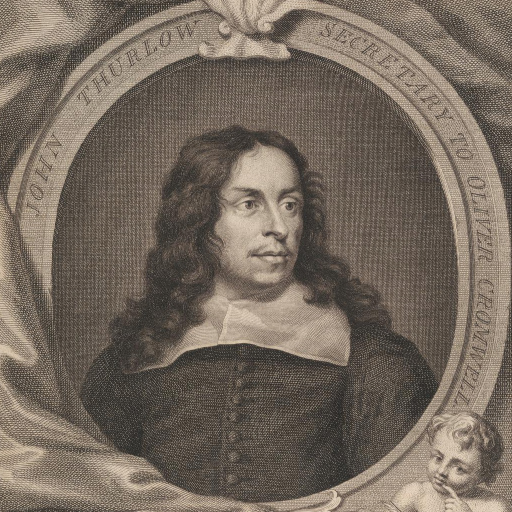
  • John Thurloe 1616-1668

    He is an important character in my stories – indeed he is the inspiration for them. Despite being one of the most powerful men during the English Republic, you don’t hear much of him when the Interregnum is discussed. He was secretary to Oliver St John, a prime mover on the Parliamentarian side during the Civil Wars, then became Secretary of State in the Republic and Cromwell’s right-hand man, particularly in foreign affairs, his Head of Intelligence and Postmaster-General – the last two being closely linked.

    Despite the discovery of his state papers 40 years after his death (they were hidden in a false ceiling in his rooms in Lincoln’s Inn), he remains a shadowy figure with few biographies – Philip Aubrey’s Mr Secretary Thurloe (1990) appears to be the best.

  • Progress on the next book

    … has been very slow of late. Too many distractions such as work on our house; much activity with our local u3a; grandchildrens’ birthdays and life in general.

    Nothing to with me simply not putting enough hours into writing, of course. Not at all. Well, not very much.

    When I do get time to write I have found that Sarah simply got too posh in the ‘Urchin’ and it’s proving difficult to persuade her to appear in the ‘Sudden Deaths’. I think she wants to be a transvestite again, but she may well have to content herself with dressing way below her new station in life.

    Meanwhile a new character is introducing himself and, without giving too much away, I’m having to research the 17th Century medical profession, with its division into doctors, surgeons and apothecaries. Said research has included watching 48 episodes of the Apothecary Diaries, a Japanese anime set in the Imperial Palace in the Tang/Ming dynasty. Not much help for Cromwellian London, but fun.

  • Pictures

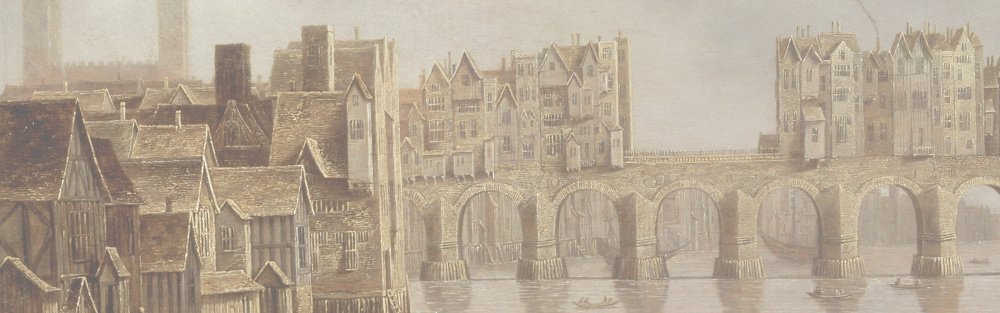
    The main image I use for the cover of The Spy and The Urchin and for the banner of this web site, is by Claude de Jongh, (View of London Bridge) and comes courtesy of the Yale Center for British Art (Paul Mellon Fund, B2005.4)

    The reason I’m using this image rather than, say,

    https://collections.vam.ac.uk/item/O134555/view-of-old-london-bridge-oil-painting-jongh-claude-de

    or

    https://www.english-heritage.org.uk/visit/places/kenwood/history-stories-kenwood/old-london-bridge

    is copyright or, rather, my unwillingness to fight these museums over copyright – more on this another time.

    Acquiring the right to use a picture in a ‘commercial’ work is a tricky task and one that has had an airing on bluesky (bsky.app) – a social media app for those looking for an alternative to single letter social media – in the last week.

    Dr Laura Sangha (@lsangha.bsky.social) asked for sources of public domain images, specifically for #EarlyModern period and if you follow the replies there are some great resources out there, though with a bias towards academic use. Happy image hunting everyone.