D A Parsons

Author Site

News

  • The Apothecary’s Tale

    … is the title of a chapter in Sudden Deaths. My apothecary needed a to be familiar with both medicine and surgery in order to help Ben with his investigations. He also needed to have a motive to kill his benefactors – [SPOILER, he didn’t actually kill them]. So he demanded a backstory to explain all this and I had to research the situation of Protestants in Early Modern France and also some basics of the Thirty Years war, which gave him his field experience of surgery.

    So I ended up reading something over 25,000 words in order to write maybe 1,000. Hey ho!

  • John Wilkins 1614-1672

    … was a natural philosopher and one of the few people to have been the head of a college at both the universities, becoming Warden of Wadham College in Oxford in 1648 and moving to be Master of Trinity College, Cambridge in 1657. The latter appointment was arranged by Cromwell, who was by then his brother-in-law.

    Wilkins was involved with a group of experimental scientists in London and Oxford which would go on to form the Royal Society. John Wallis, the mathematician and cryptographer in ‘The Urchin’, was part of this group. I’m trying to persuade Wilkins, who was a very interesting character, to put in a cameo in ‘Sudden Deaths’, but he’s proving a bit coy at the moment.

  • Why write?

    Another enjoyable meeting of the #HistoricalNovelSociety Devon Chapter last Thursday, even though I had to leave early.

    The question of why one writes was raised. I said that I wrote what I wanted to read, but, thinking about it later, I realised that that was a rather simplistic answer.

    One of our number was told that the period of her story was not one that was popular. For me that would not be something that I was interested in hearing. I enjoy reading, fiction or non-fiction, about the English Republic. We are often enjoined to write what we know. I think that would be better put as, ‘Write what you are interested in.’ I don’t even aspire to ‘know’ the Republic, but I do my research diligently and I could not do that if I were not really curious about the period. I could not wade through the reading neither could I write with enthusiasm – which I hope comes across in my work – without that relish for the topic.

    Part of the reason that I write is that I think other people would enjoy knowing more of ‘my’ period and might come to share my passion for it.

    At the end of the day it’s your passion for your period that will make your story worth reading – it’s the story that matters.

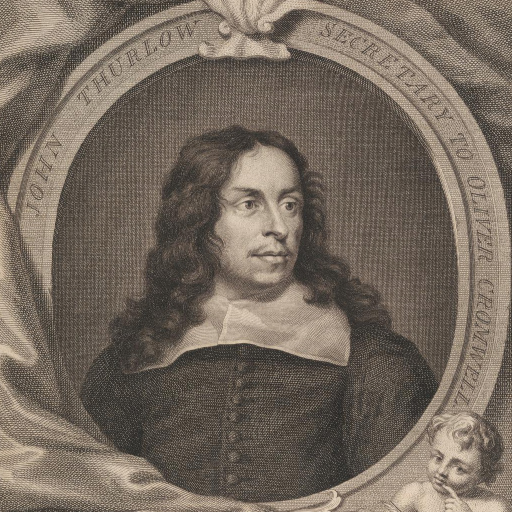
  • John Thurloe 1616-1668

    He is an important character in my stories – indeed he is the inspiration for them. Despite being one of the most powerful men during the English Republic, you don’t hear much of him when the Interregnum is discussed. He was secretary to Oliver St John, a prime mover on the Parliamentarian side during the Civil Wars, then became Secretary of State in the Republic and Cromwell’s right-hand man, particularly in foreign affairs, his Head of Intelligence and Postmaster-General – the last two being closely linked.

    Despite the discovery of his state papers 40 years after his death (they were hidden in a false ceiling in his rooms in Lincoln’s Inn), he remains a shadowy figure with few biographies – Philip Aubrey’s Mr Secretary Thurloe (1990) appears to be the best.

  • Progress on the next book

    … has been very slow of late. Too many distractions such as work on our house; much activity with our local u3a; grandchildrens’ birthdays and life in general.

    Nothing to with me simply not putting enough hours into writing, of course. Not at all. Well, not very much.

    When I do get time to write I have found that Sarah simply got too posh in the ‘Urchin’ and it’s proving difficult to persuade her to appear in the ‘Sudden Deaths’. I think she wants to be a transvestite again, but she may well have to content herself with dressing way below her new station in life.

    Meanwhile a new character is introducing himself and, without giving too much away, I’m having to research the 17th Century medical profession, with its division into doctors, surgeons and apothecaries. Said research has included watching 48 episodes of the Apothecary Diaries, a Japanese anime set in the Imperial Palace in the Tang/Ming dynasty. Not much help for Cromwellian London, but fun.

  • Pictures

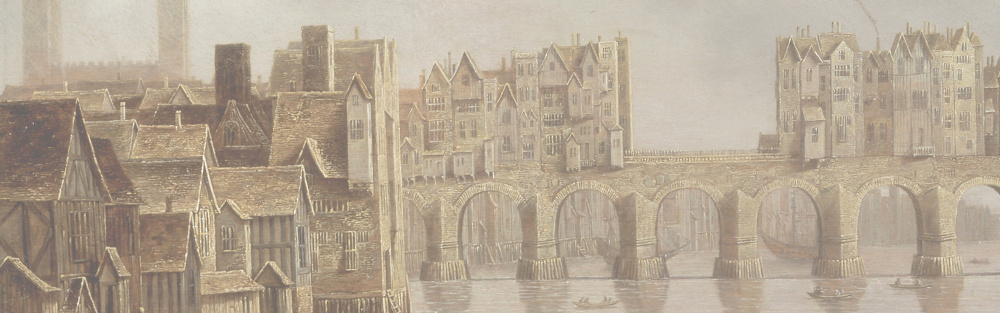
    The main image I use for the cover of The Spy and The Urchin and for the banner of this web site, is by Claude de Jongh, (View of London Bridge) and comes courtesy of the Yale Center for British Art (Paul Mellon Fund, B2005.4)

    The reason I’m using this image rather than, say,

    https://collections.vam.ac.uk/item/O134555/view-of-old-london-bridge-oil-painting-jongh-claude-de

    or

    https://www.english-heritage.org.uk/visit/places/kenwood/history-stories-kenwood/old-london-bridge

    is copyright or, rather, my unwillingness to fight these museums over copyright – more on this another time.

    Acquiring the right to use a picture in a ‘commercial’ work is a tricky task and one that has had an airing on bluesky (bsky.app) – a social media app for those looking for an alternative to single letter social media – in the last week.

    Dr Laura Sangha (@lsangha.bsky.social) asked for sources of public domain images, specifically for #EarlyModern period and if you follow the replies there are some great resources out there, though with a bias towards academic use. Happy image hunting everyone.

  • Historical Novel Society

    Devon Chapter

    I have recently joined the Historical Novel Society and on Thursday met up with some members of the Devon Chapter. Given the wealth of knowledge, experience and number of published books demonstrated by those present, I am now suffering severely from imposter syndrome. I’m just glad no-one is writing in precisely the same segment as I am, the closest being during the Civil Wars and from the Royalist side, as opposed to my Protectorate/Parliamentarian take on the period.
    What a really interesting and kind bunch of people – I look forward to meeting them again.

  • Researching Historical Fiction

    The big issues for me are starting and stopping.

    Starting is always a problem. Where do you look to see if there is a tavern or alehouse close to Queenhithe? Where do you find a plan of a the farmhouse of a prosperous Devon farmer?

    London does have lots of resources, such as the AGAS map, which makes it so much easier to navigate the streets of the 17th Century city.

    Devon has relatively few (pun coming up!) resources which allow you to get down to the roots (!), but Janet Few’s books and Ivan Root’s work do help.

    Stopping is an issue too. I’m really interested in the period my work is set in, so I will just keep reading and forget to do any writing. And once you have done all that reading, you have to resist the temptation to put everything in, particularly when you feel the pressure to keep the word count rising.

    It’s a hard life writing 😏.

  • Ideas

    A question that is often asked of authors is, “Where do you get your ideas from?” It is, most of the time, one that is very difficult to answer, but I can tell you about one idea that is easy to pin down.

    I was reading about the social history of the Early Stuart Era when I came across a reference to ‘The Holland House’ in Southwark as a brothel and the rules that prostitutes had to follow. I then looked for this establishment elsewhere and, after some initial confusion with ‘Holland House’, originally Cope Castle, built for Sir Walter Cope in 1605 in Kensington, found ‘Holland’s Leaguer’.

    This was a moated manor house situated in Liberty of Paris Garden, probably close to what is today Holland Street, near the back of Tate Modern. Paris Garden was one of three liberties in Southwark which were still outside the purview of the City of London during the seventeenth century (the others being The Clink and The Mint). This meant that all sorts of activities that the City Common Council would not allow in the City, could be carried on in the liberties – one example being the construction of The Globe theatre. The manor house passed into the hands of Bess Holland around 1602 and she transformed it from a high-class gambling house to a high-class brothel. In late 1631 an attempt to eject Holland failed, but the authorities did not give up, but besieged the house and by early February it appears that Bess had gone. It was at this point that the house acquired the name Holland’s Leaguer.

    Leaguer – a military camp, especially one under siege – from the Dutch leger, camp (like laager?) – compare ‘beleaguered’. There was also a play entitled Holland’s Leaguer.

    So I had to use very little imagination to create The Dutch House and Ma Dutch, which, I’m afraid, don’t have half the history of Holland’s Leaguer.
  • Publication

    I’m pleased to say that my novel, ‘The Spy and The Urchin’, is now available on Amazon as either a paperback or an e-book. All being well it should be available in proper bookshops eventually.

    I am setting up new accounts on Facebook and bluesky to go with the branding :-), #daparsons.

    I will update these regularly, so if you would like to hear about developments, please follow me on one of them. I don’t do single letter social media.


    A big thank you to everyone who has encouraged me to finish and publish this book. I have two more in the pipeline.