D A Parsons

Author Site

News

  • Iceberg Theory

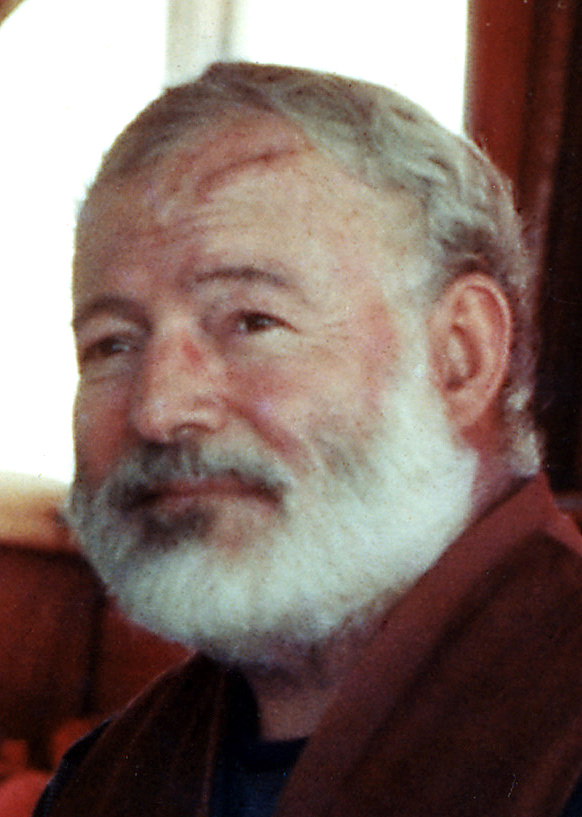
    I have only recently come across this idea of Ernest Hemingway’s that one should just give clues to the reader of what the characters are thinking and doing, leaving most of it unsaid and so for the reader to work out for themselves. I do believe that readers find it most satisfying to unravel the sub-text for themselves and have their own picture of the thoughts and motivation of the protagonists.

    Hemingway himself made the point that the writer must have a clear idea of these before he writes, otherwise the iceberg is likely to melt away.

    I am not at all sure that this is a way of producing ‘popular’ fiction, but I do think it produces fiction that I would want to read and that is a large part of my motivation for writing.

  • Elcho Castle

    We are recently back from a trip to Scotland.

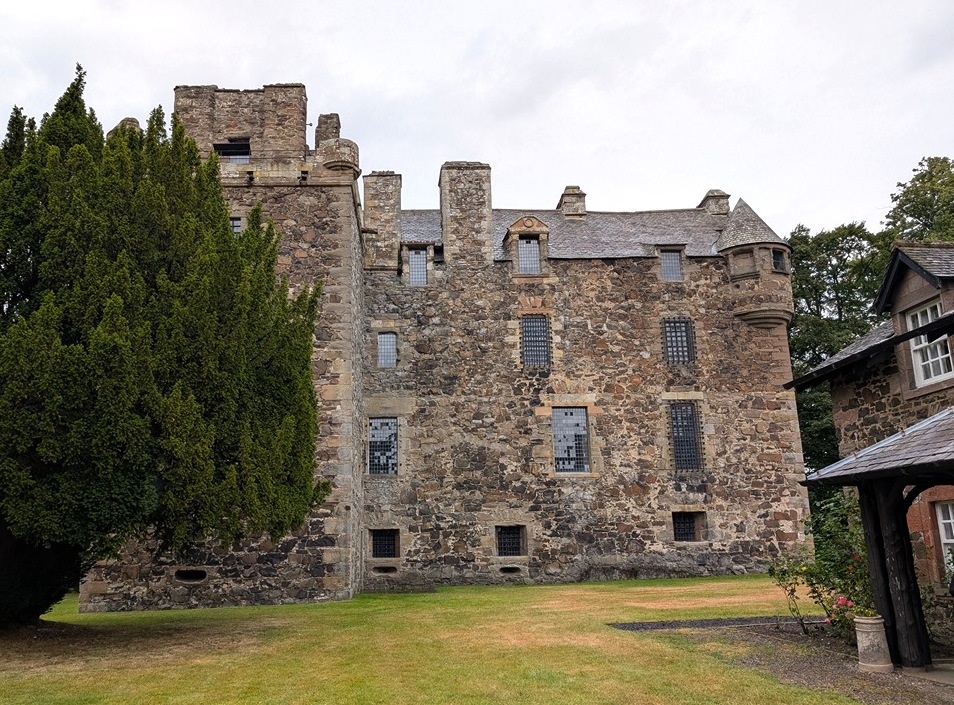
    We visited Perth museum (among many interesting exhibits it has some 17th costumes, which may work their way into the books), the Crannoch Centre (which I can highly recommend, but is about 2,000 years early for my period) and Elcho Castle. This is a ‘fortified tower house’ built by the Wemyss family around 1560. Still a century before my books, but still in use at that time, more for a ‘second home’ than as a fortified residence. Well equipped for both owners and guests (at least 13 privies, including some ‘en-suite’!), with grand views over the surrounding countryside and down to the Tay from the rooftop walkways, it seems to have been a holiday home for the Wemyss family, one of the most prominent in the area.

    I’d like to work it into a future book, particularly as it’s not too far from Abernethy, notionally the Scottish seat of Sarah/Chas’s grandfather.

    The castle represents a transition from the Medieval keep to the Early Modern mansion. Within the outer walls (now gone) were probably ornamental, herb and kitchen gardens, as well as orchards – the orchards now there are recent planting, but represent traditional varieties of apples, pears and plum.

  • Review on #HNS


    There is a warm review of ‘The Urchin’ on the Historical Novel Society’s web site, so this week I am simply providing a link to that here.

  • Covers – 3

    Once you have decided what the cover image should show, how do you produce it? If you are traditionally published, your publisher may have the skills necessary in-house, or may point you to a cover artist. Those of us self-publishing do not have that, albeit expensive, luxury. One option is to find a cover artist ourselves, perhaps a friend or commercial artist. The danger, in my mind, is that they would charge me a small fortune for something that did not fit with my idea of how the novel should be seen.

    I have written before about the search for a graphic which I could use freely for commercial use: others might be happy to pay a fee for a copyright image. For me the negotiating this is even more off-putting than having to pay.

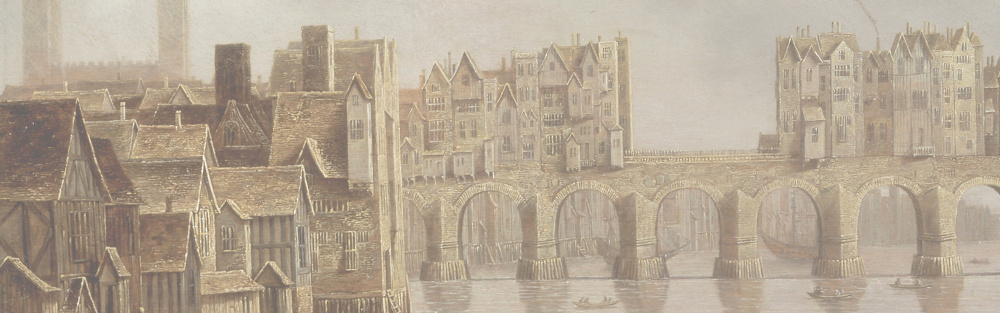
    Another option is to use AI. I tried this about a year ago when I was first thinking about a cover for ‘The Urchin’. My prompt was something like, ‘A picture of a spy in a mid 17th Century London setting’. The result amused and appalled me in equal measure. The spy was a James Bond type in a dinner jacket carrying an automatic pistol. To show it was London there were a few elements including St. Paul’s (the newer one, not the pre-fire one, of course) and Big Ben. In fact, to hammer home the point, there were three copies of Big Ben in this version of London!

    AI graphics have come on greatly in the last year. Hardly ever do you get people with six fingers or two and I might be able to write a much better prompt now. A friend almost always uses AI to produce a first draft of a cover, though he invariably then puts it into Photoshop to make it much more like what he wanted, changing lighting, shading, etc.. Unfortunately, my graphics software skills are not up to his level.

    How do you produce your covers?

  • Cover – 2

    How do you go from your lovingly crafted historical text to a cover? The first step is to decide what will both hook your reader in and tell them what sort of book yours is. For a historical novel the dress and/or weaponry may do both. If it’s a romance we usually see two figures. If it’s the story of a single central character, perhaps putting them on the cover is a good idea, but, unless they are a warrior, or, perhaps, a seductress, conveying their character in an image is not an easy task. As I noted last time, many established authors go for a more abstract image, presumably relying on the author’s name in a big bold typeface to sell the book. My preference is for a picture that evokes the era without giving much clue as to the story.

    Of course, as a general rule, the image is only background to the text on the cover. The title should be the main way of interesting the reader. You hope to draw them in and give them some idea of genre at the same time. I use an old-looking font in a script style for the title, again to give the sense of a past era. The author’s name may be the highlight of the cover, but not for most of us aspirants to the title of ‘Writer’.

    What else to put on the cover? Like many, I use a subtitle or ‘tagline’. Others will use review quotes, which may be from a posh Sunday Supplement, or from your local writer’s group—some may be entirely made up by the author (‘surely not’, do I hear you say?).

    Whatever you put on the cover, do make sure that the image does not obliterate the text, either on the front cover or the spine. Don’t forget that this will be the first glimpse of your work for most potential readers and they need to be able to read it easily and to remember it.

  • Covers

    At this month’s Devon HNS meeting we talked about, among other things, book covers.

    When I go into my local bookshop the first thing I see is tables with books piled on them. I can see at a glance a profusion of covers. Many have two people on the front and I can be pretty sure that they are some kind of romance. It doesn’t matter if they are looking at each other lovingly or are back-to-back with stony expressions, or even if they are of the same sex. The way they are dressed will give away the historical period in which the book is set and there may be further clues in the background. Not all romance covers look like this, but, if you are trying to design a cover for your romance, this seems a way of making your book immediately recognisable as a romance to your potential readers.

    If your setting is the Roman Empire, a three-quarter length gladiator or legionary, branding a gladius or pilum, seems to be de rigueur. The major exception to this seems to be Lindsey Davis, whose Roman era mystery/crime novels do not have a person on the cover at all, except for the US covers of the Flavia Alba series.

    So what are the necessities of a cover for a historical novel?

    Let me state my prejudices here: for me it’s not a historical novel if the setting is less than a hundred years ago. In this case, clothing is a good way to indicate period, though that does depend on your reader being able to tell that your hero on the cover is wearing mid 17th century clothes, rather than Elizabethan or Georgian. Of course, you may want to make the period a bit more vague, so as to draw in the widest range of browsers.

    Many established and traditionally published authors use more abstract designs for their covers, with perhaps a small Tudor rose to give a hint of period, but they can probably rely on the author’s name in large letters to sell their books.

  • I’m a Pantser – Sort of…

    In US English, a ‘pantser’ is someone who writes ‘by the seat of their pants’. While the latter expression is in common use in the UK, the word ‘pantser’ is not in any English dictionary that I can find (and Word keeps underlining it in red, so it can’t be real).

    It means that I write without a structured outline of my novel before I start writing. Now I can’t write with no idea of what I’m writing about (despite claims by some to the contrary!), so I do have a reasonable idea of the elements that will make up my story (or stories in Sudden Deaths), but I do not have anything written down. I start to write and the characters appear on the stage and do whatever it is they want to do. At some point I do have to make a note of who they are, why they did what they did and where and when they did it. Of course, when I have finished the first draft I have to check carefully that what happens is consistent: it often needs a lot of re-writing at this point.

    Is it a good way to write? It works for me in that it allows my characters to tell their story and I sometime feel that I’m just along for the ride, which can be uncomfortable, but feels truer than if I told them what they had to do all the time.

  • Letters

    The epistolatary novel is a well-used form from Clarissa (Richardson) to Excession (Banks), so, while I can’t (yet) see myself writing a whole novel in this style, I thought I might write a chapter in Sudden Deaths using the approach.

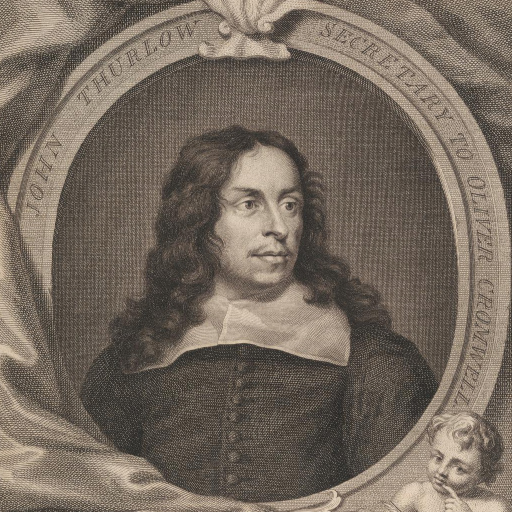
    Chas/Sarah is exchanging letters with Thurloe as she is brought into play in the story, quite independently of Ben. I think Thurloe believes Ben may need a helping hand, but doesn’t want to display any lack of confidence.

    Not something I’ve tried before, so wish me luck.

  • Does AI Mean the End for Novelists?

    Some of my novelist friends are very concerned about the impact of AI on their profession.

    If a lot of AI generated ‘slop’ is created, will their hard won handiwork disappear in a tide of rubbish? Will readers find it even harder to track down quality fiction? Will publishers, (including those who support self-publishing) as well as writers, become irrelevant?

    Again there are no easy answers, but I do believe that most people can tell good writing from bad – of course, if AI writing gets much better, as it must in time, it may be that us poor humans will not be able to compete – perhaps we won’t deserve to?

    In a world where, it seems, anything we do manage to publish seems to be treated as fodder for the AI behemoths, to be regurgitated in garbled fashion to anyone with the right prompt, it sometimes doesn’t seem worthwhile anyway? ☹️

  • Writing and AI – Copyright

    Caveat: I am not a lawyer and the following represents my understanding of the law – not to be relied upon for legal purposes!

    Since the ’60s, in England, if I write sufficiently specific instructions to make a computer create a piece of work (writing, artwork, a computer program etc.), then I own the copyright in that work.

    I make a drawing of a unique object using computer aided design software, have my computer turn that into a .stl file (Standard Triangle Language, a file used to define a 3D shape using triangles), then put that into a ‘slicer’ (software which translates the stl file into g-code the detailed instructions for my type of 3D printer) and use the printer (and its embedded computer) to produce the object that I had in mind at the start. I think most people would say that I created that object and should be entitled to hold copyright in my original work.

    If I write a 500 word synopsis of a novel and ask ChatGPT to give me the 100,000 word finished novel, then I own the copyright in that novel. Should I? In most parts of the world the legal answer seems to be ‘No’ and there are moves to change English law to fall in line.

    The argument in the US and other jurisdictions seems to be that if the AI created the work, then, since the AI is not a person and cannot own the copyright, there is no copyright. Of course, the word created is the crucial one in this. I hold copyright in what I write in my own words. Suppose I decide that I have overused the word ‘significant’ in my novel. I could look online at a Thesaurus and go through changing occurrences of ‘significant’ to ‘noteworthy’ or ‘important’, at random. I could get my word processing software to do most of that work for me. I could write a program to do it for me, either from a list of synonyms that I gave it, or by looking online for synonyms. Or I could get ChatGPT to do the job. Is there a difference in ‘creativity’?

    Once again, I have to leave it to better minds than mine to define the legal distinctions in a consistent and logical fashion.